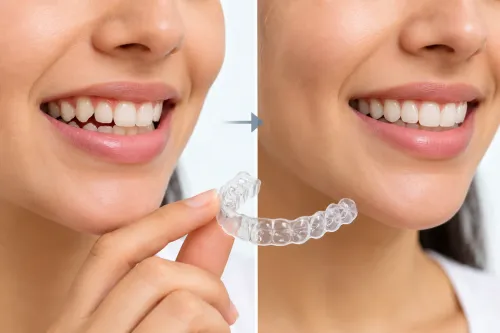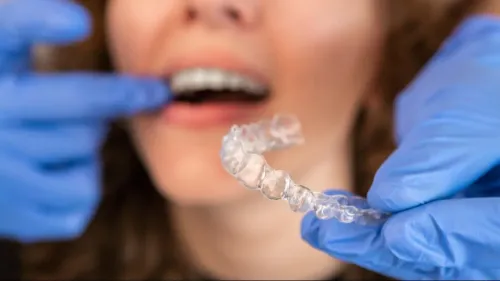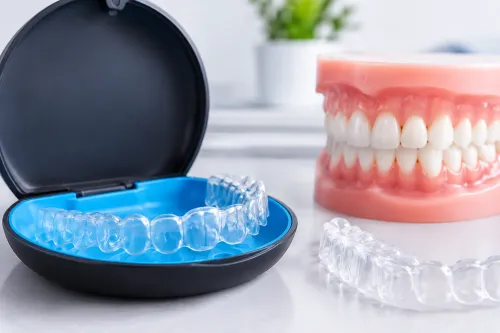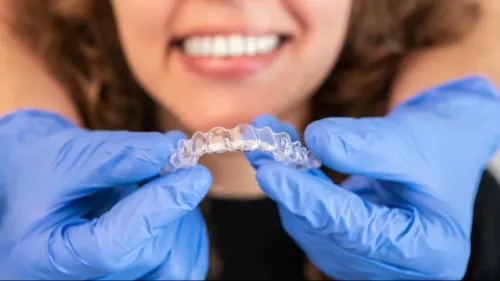
An underbite is a bite condition in which the lower front teeth sit ahead of the upper front teeth when the mouth closes. People researching clear aligners for underbite correction often want to know whether removable treatment can address the condition without conventional braces.
The answer depends heavily on what is causing the underbite.
Dental and Skeletal Underbites Are Different
Some underbites are primarily associated with tooth positioning. Others involve the relationship between the upper and lower jaws.
This distinction is critical.
Clear aligners work by producing planned tooth movements. Consequently, their suitability depends on whether the required correction can reasonably be achieved through orthodontic tooth movement.
More complex jaw-related cases may require a different treatment strategy.
Signs That Need Assessment
An underbite can present differently from one person to another. Common characteristics may include:
- Lower front teeth positioned ahead of upper teeth
- Difficulty achieving comfortable tooth contact
- Uneven wear patterns
- Concerns about facial or smile appearance
- Associated crowding or spacing
A visual self-assessment cannot establish the exact nature of the problem.
When Might Clear Aligners Be Considered?
For selected cases, digitally planned aligners may help reposition teeth and improve bite relationships.
Oroshine Aligners and Implants manufactures alignment solutions based on staged tooth movement. The treatment prescribed to an individual patient, however, should be based on assessment by an appropriate dental professional.
Important suitability factors include the severity of the underbite, tooth positions, available space, periodontal health and the amount of movement required.
Questions Worth Asking During Consultation
Patients in Thane evaluating aligner treatment can ask:
- Is my underbite primarily dental or skeletal?
- Which teeth need movement?
- Can clear aligners produce those movements predictably in my case?
- Will additional orthodontic procedures be required?
- What happens if the teeth do not move as initially planned?
- Will retainers be needed afterwards?
These questions provide more meaningful information than simply asking whether clear aligners 'work.'
Why Case Selection Matters
Aligner systems should not be treated as one-size-fits-all products. Two patients who both describe themselves as having an underbite can require substantially different treatment.
For people in Thane and elsewhere in Maharashtra, professional assessment is therefore the most important step before selecting an appliance.
Clear aligners may offer a discreet route for managing appropriate underbite cases, but their value depends on accurate diagnosis, realistic planning and consistent wear. Understanding the cause of the underbite should always come before choosing the treatment method.
Keywords